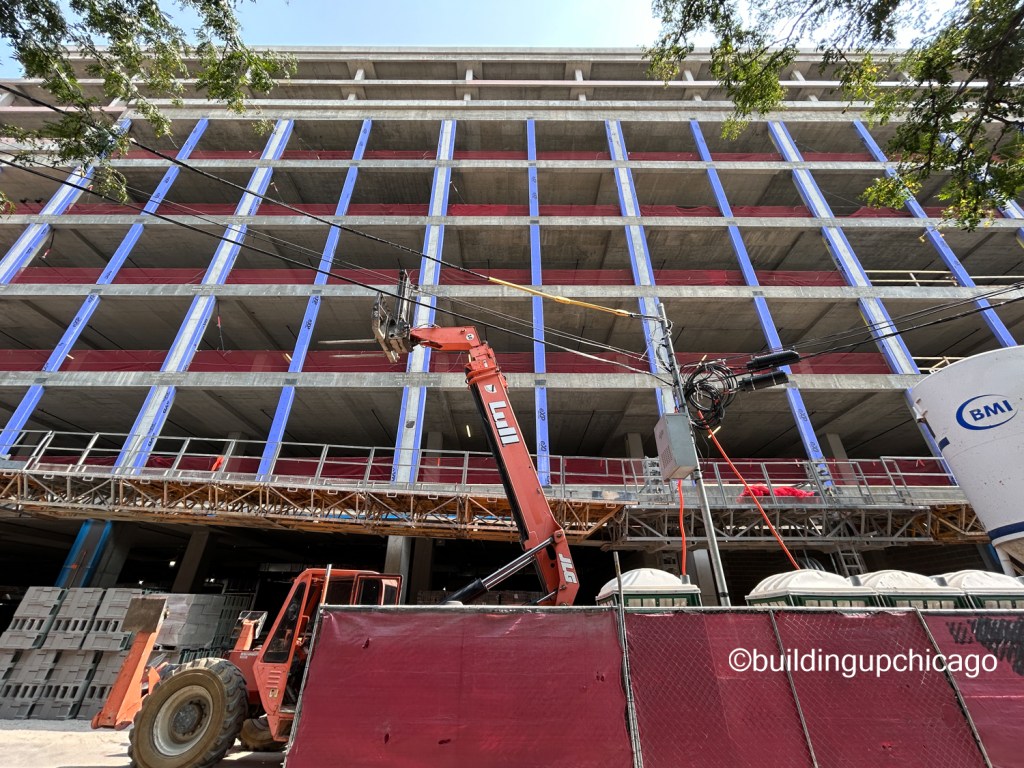
Flora (1114 West Carroll Avenue) is the newest addition to the western Chicago Skyline.
Flora, the brand-spankin’-new apartment tower at 1114 West Carroll Avenue in the Fulton Market District, is getting ready for its big opening on Tuesday, October 15. If you’ve been to the website to check on availability for studio, one-bed, two-bed, and even three-bedroom floor plans, you know that’s the day you can move in to your new pad.
The 34-story, 368-unit apartment tower, includes a below-grade 95-space garage and storage for 185 bicycles, is a sharp-looking addition to the westward-spreading West Loop. And there’s more coming to the neighborhood soon. Very soon. And Flora is one great reason to add a station to the Metra lines that don’t stop between Western Avenue and the Ogilvie Transportation Center.
Not that this should ever be a barometer for good or bad from a development, but this one lives up to its renderings. Congratulations to the Flora team, including developer Trammell Crow Company, design architects ESG Architecture & Design, and general contractor Power Construction. May your units fill up quickly. I’d happily live here, and I have a birthday coming up (next year) if anyone wants to gift me a one-bedroom.
Power got their first permit for Flora back on January 9 of 2023 with the issuance of the foundation permit. Several more permits followed, including the tower crane two weeks later, the full building permit on March 7, 2023, and permission to install four passenger elevators on October 26 of last year.
Enjoying the photos? Metra and CTA rides (and Amtrak trains to Milwaukee), Zipcars, Divvy Bikes, camera lenses, domain fees, snacks & energy drinks, and comfortable walking shoes add up. You can help offset expenses by making a greatly-appreciated donation to Building Up Chicago.
Buildings with targets on their foreheads (3029 North Lincoln Avenue, in this case) don’t usually last.3027, 3029, and 3037 are all demolished now.
A New Construction permit was issued September 17 by the City of Chicago for the property located at 3037 North Lincoln Avenue in Lake View. Said permit allows for the construction of a four-story, 15-unit residential building with a 16-car garage and retail space on the ground floor. Demolition work for three buildings (3037, 3029, and 3027 North Lincoln) being torn down to make room for the development is nearing completion, after all three of them got demo permits on July 22. So the new build should get started here very soon.
PLD Homes (Promised Land Development) is both the developer and general contractor, with Hanna Architects listed on the permit as the building’s designer. They have included balconies on all three residential floors, as well as a shared rooftop deck for all residents. I haven’t seen any renderings for this one, but I’ve been looking.
Some photos of what used to be here, and their demolition status as of 09/18/2024:
3029 North Lincoln Avenue3037 North Lincoln Avenue3027 North Lincoln Avenue
Enjoying the photos? Metra and CTA rides (and Amtrak trains to Milwaukee), Zipcars, Divvy Bikes, camera lenses, domain fees, snacks & energy drinks, and comfortable walking shoes add up. You can help offset expenses by making a greatly-appreciated donation to Building Up Chicago.
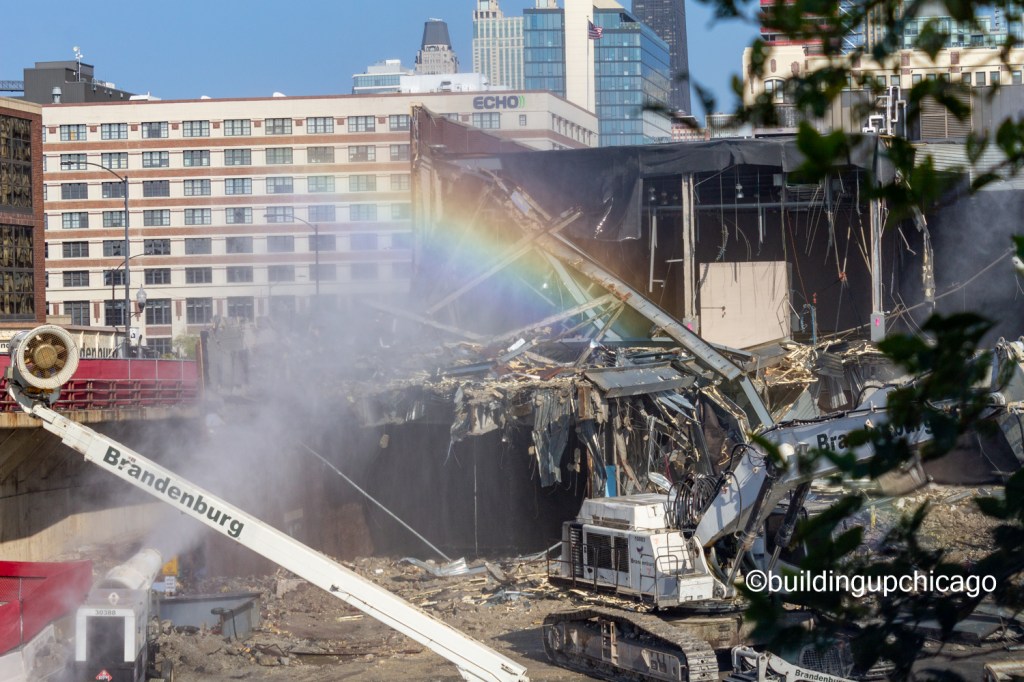
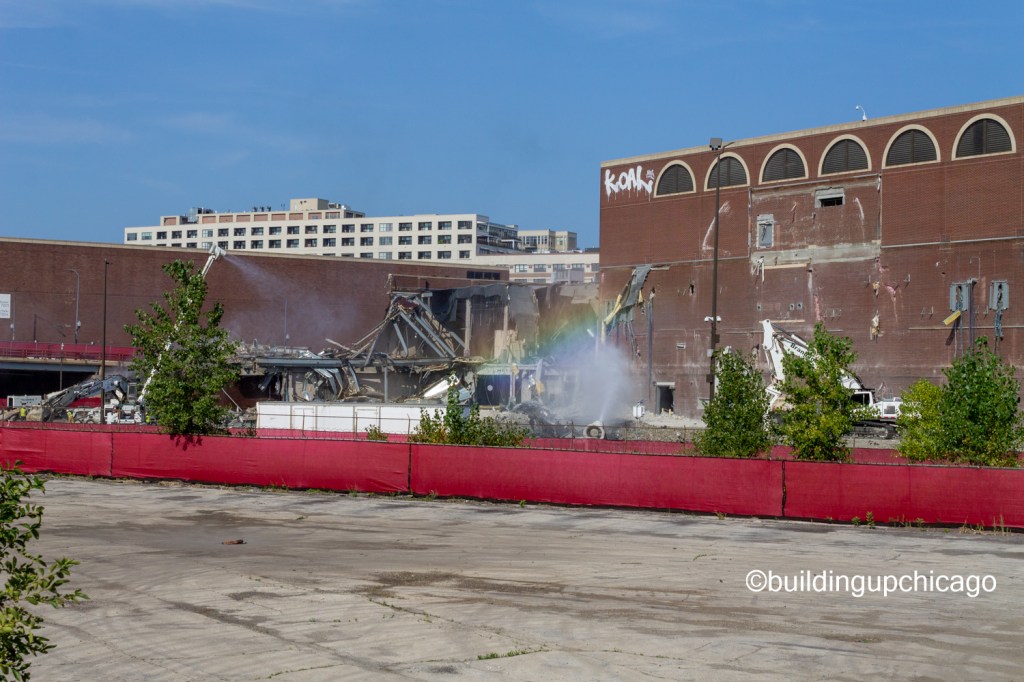
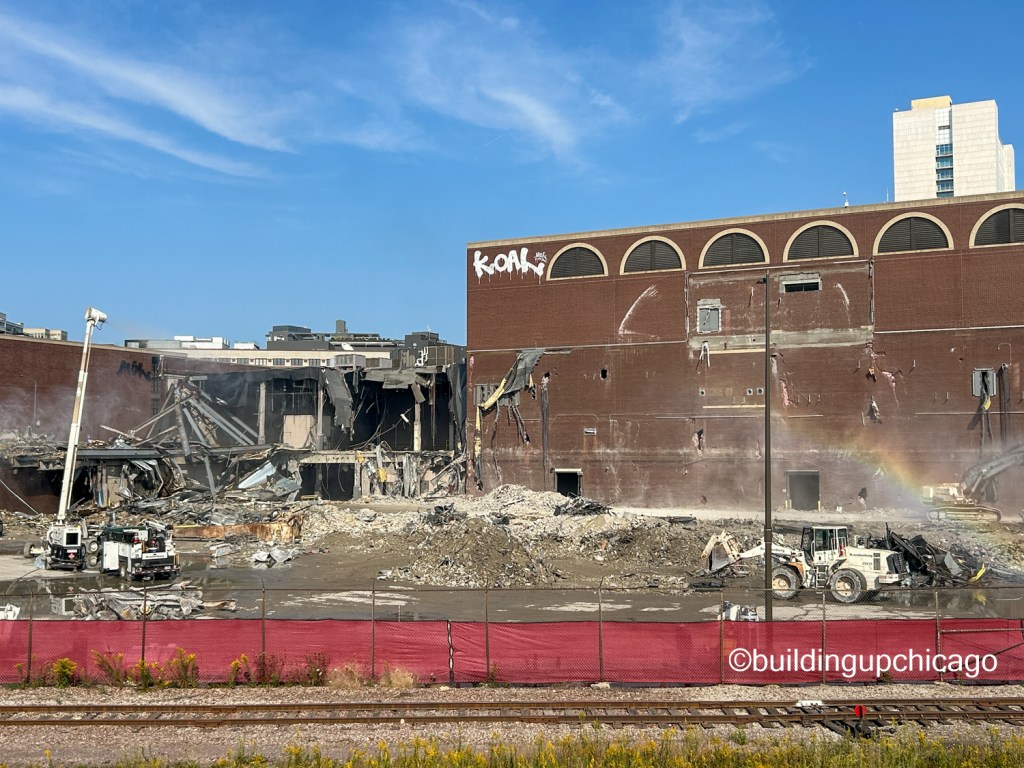
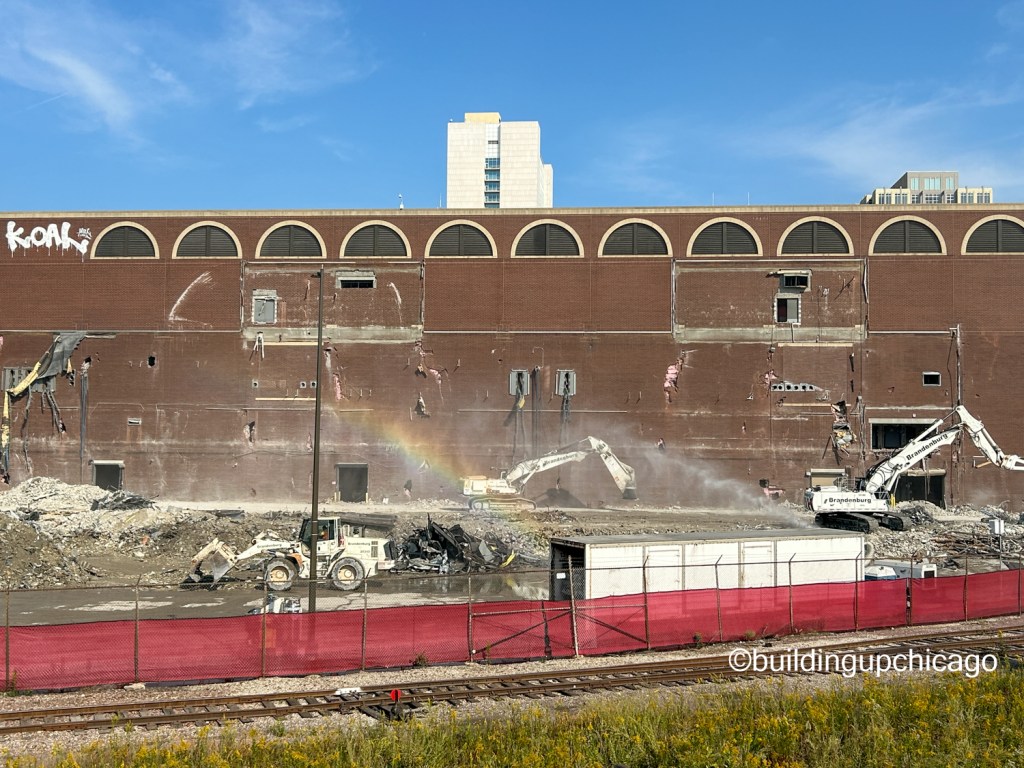
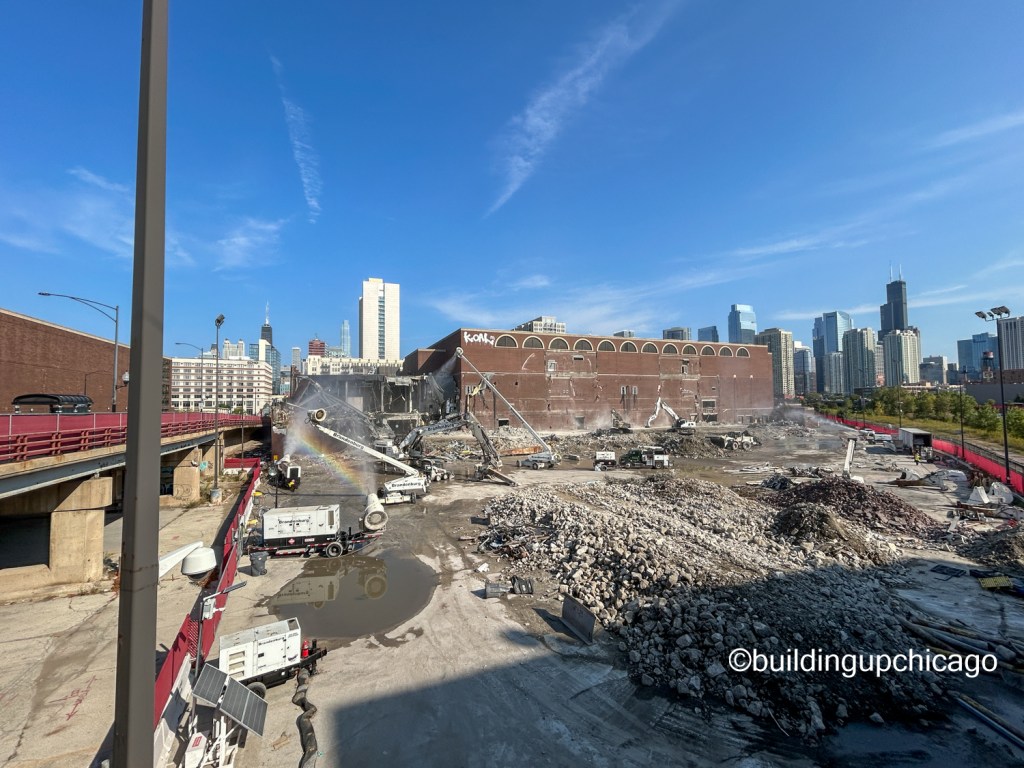
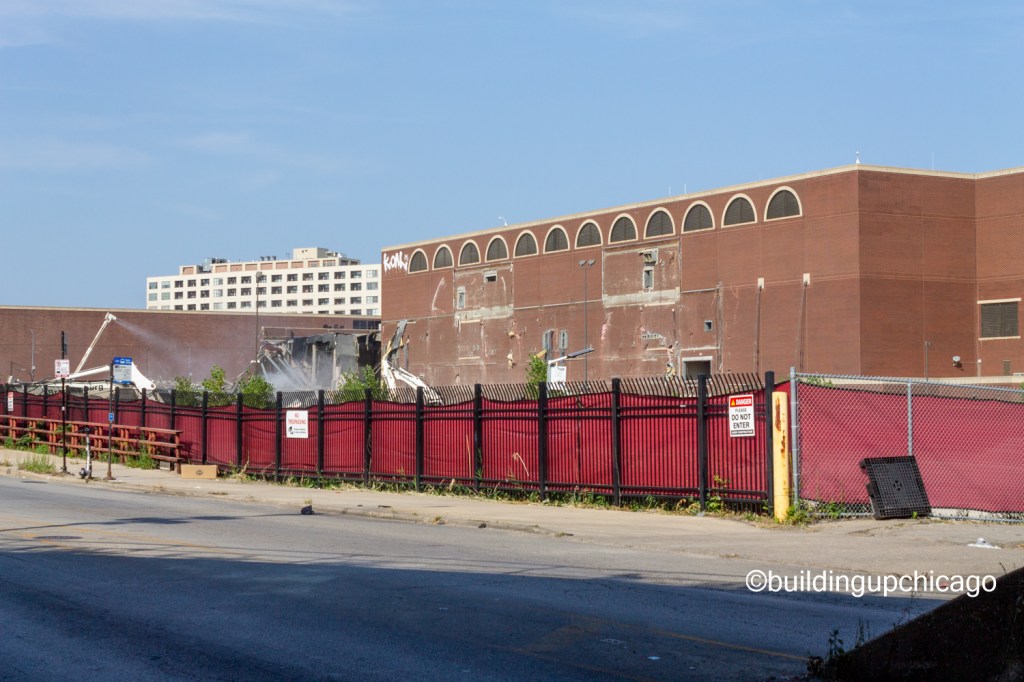
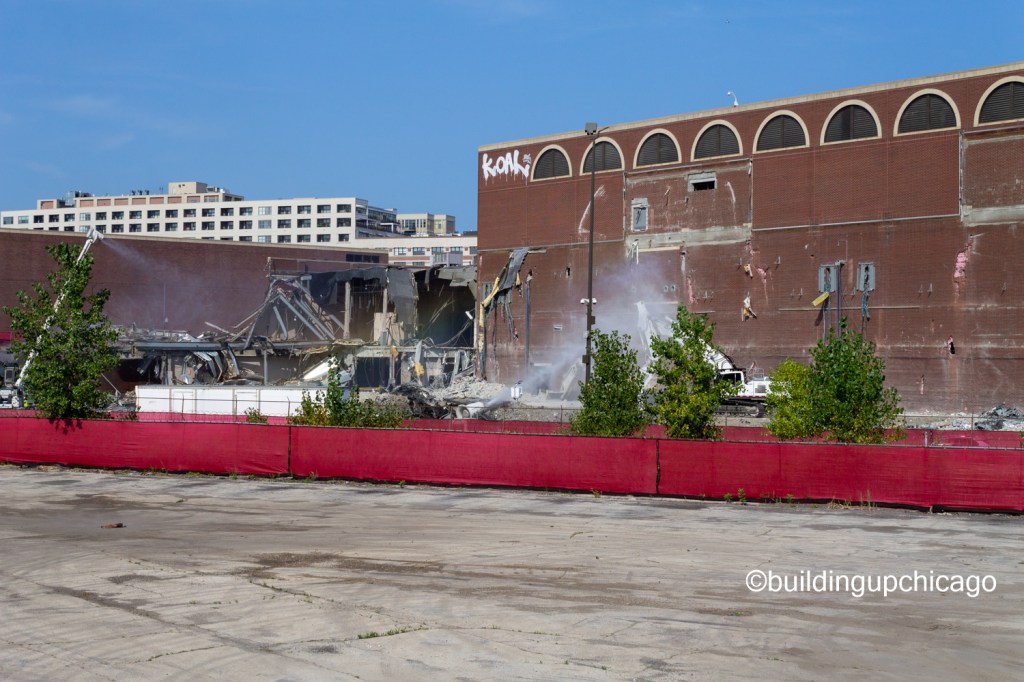
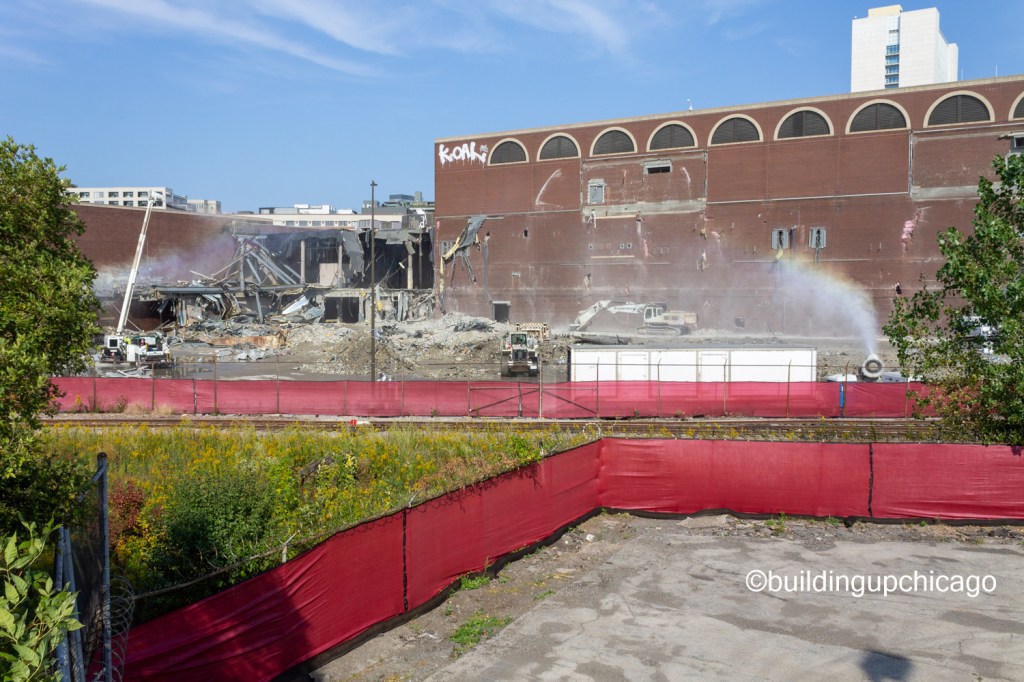
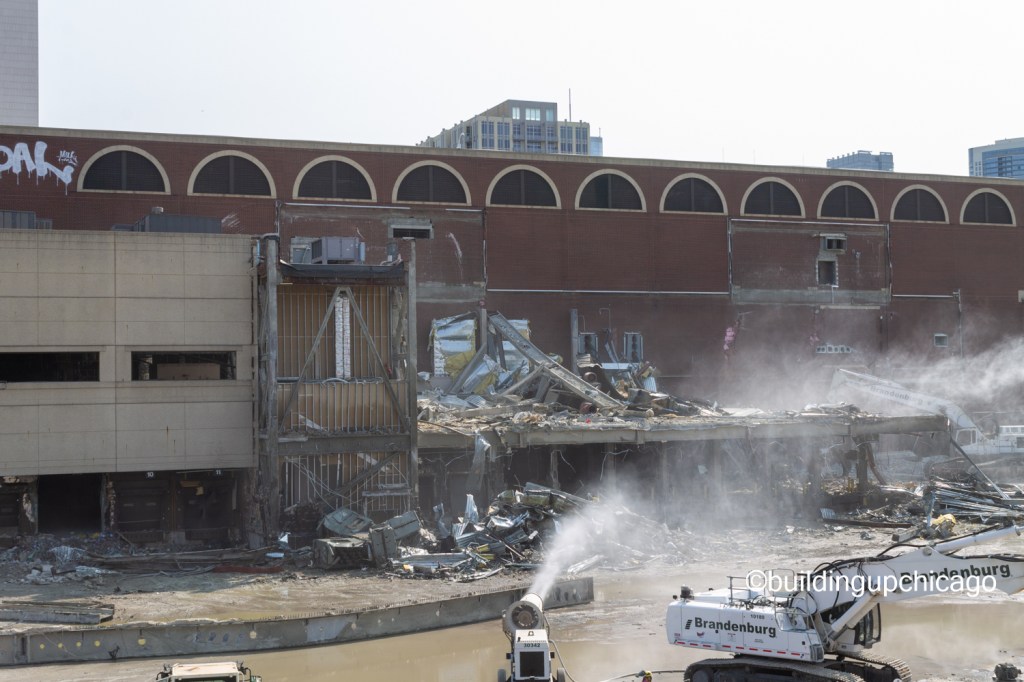
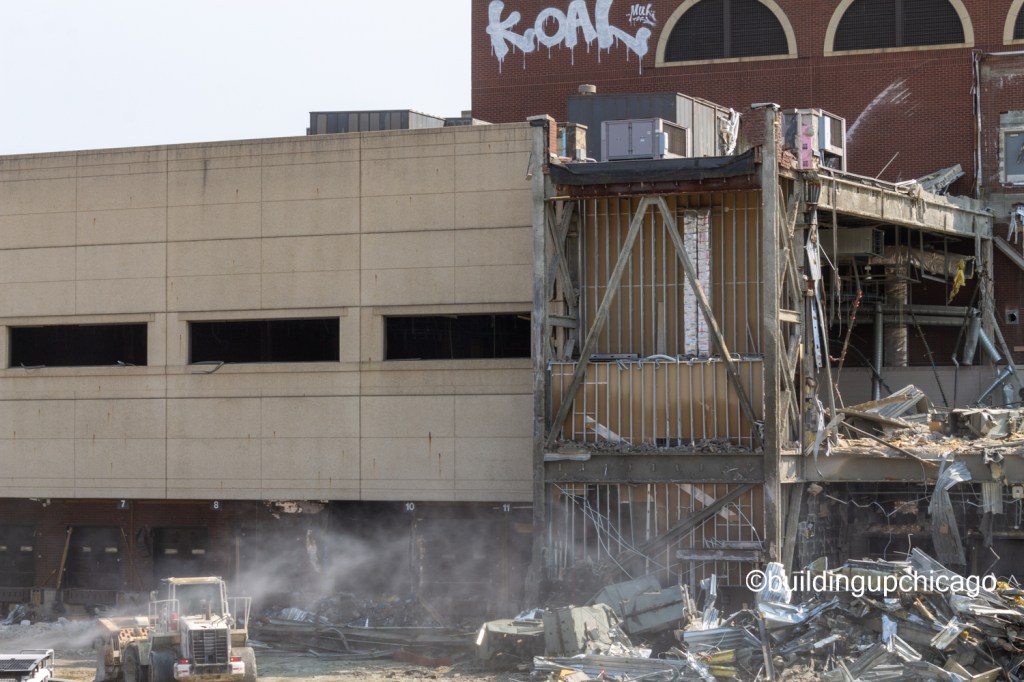
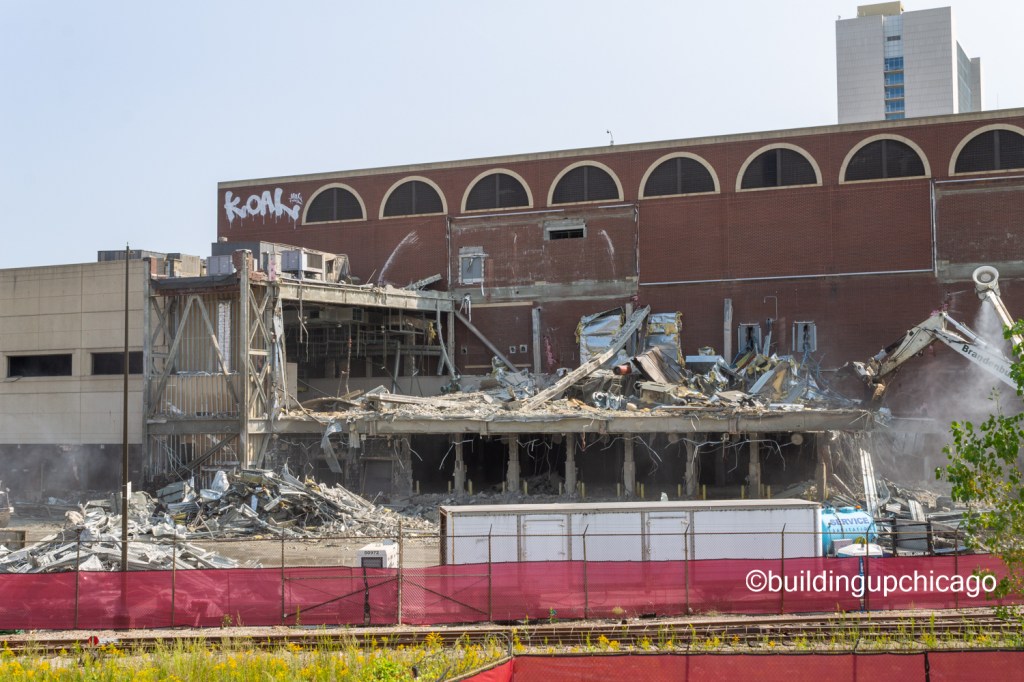
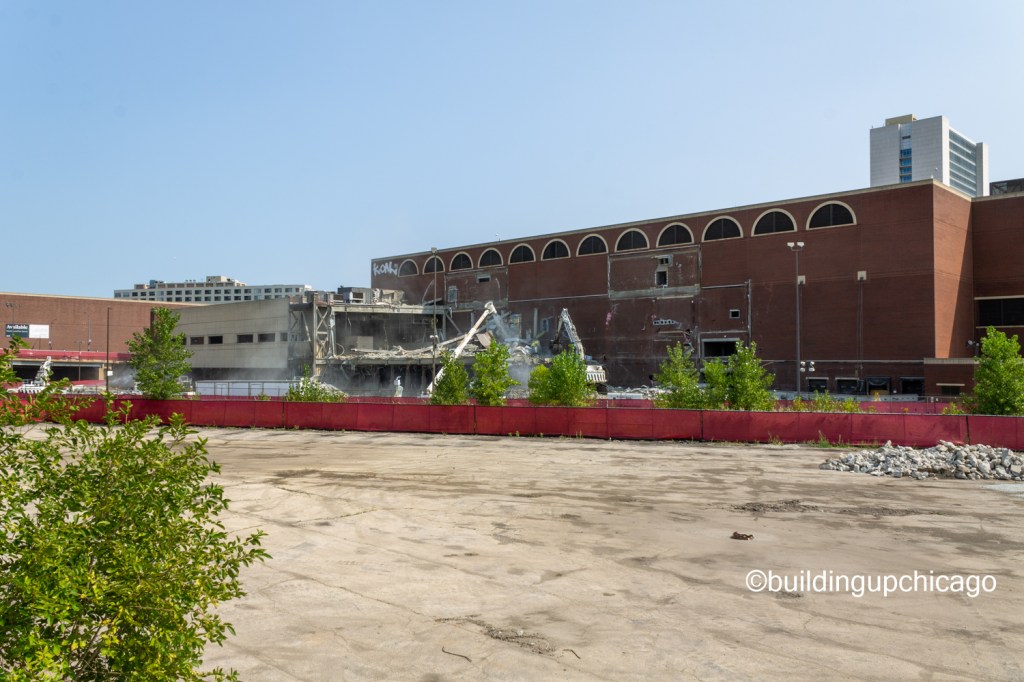
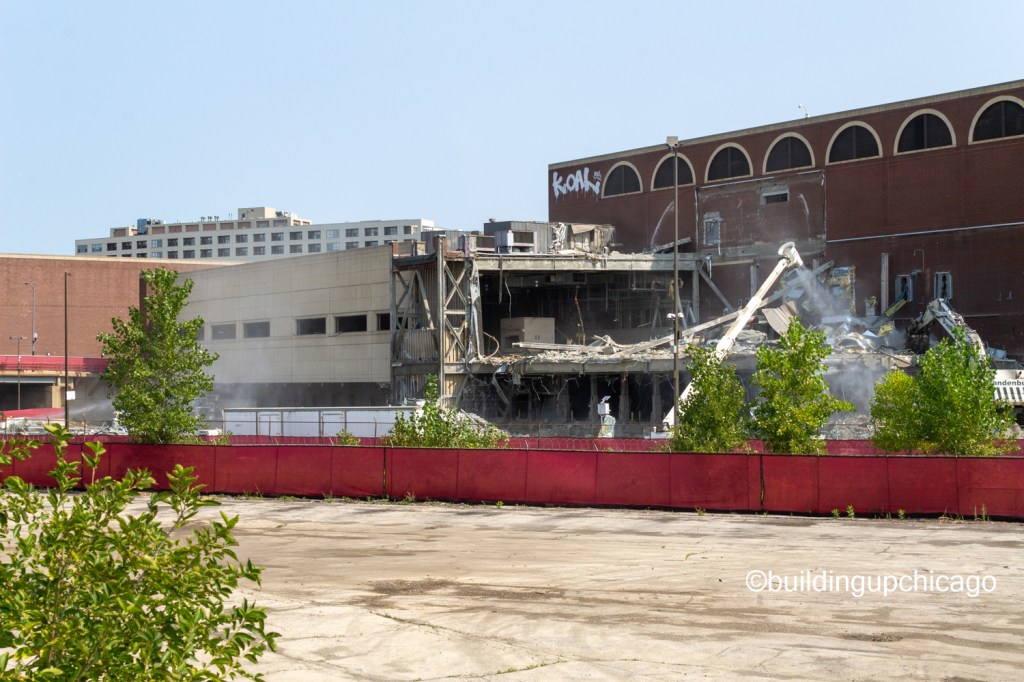
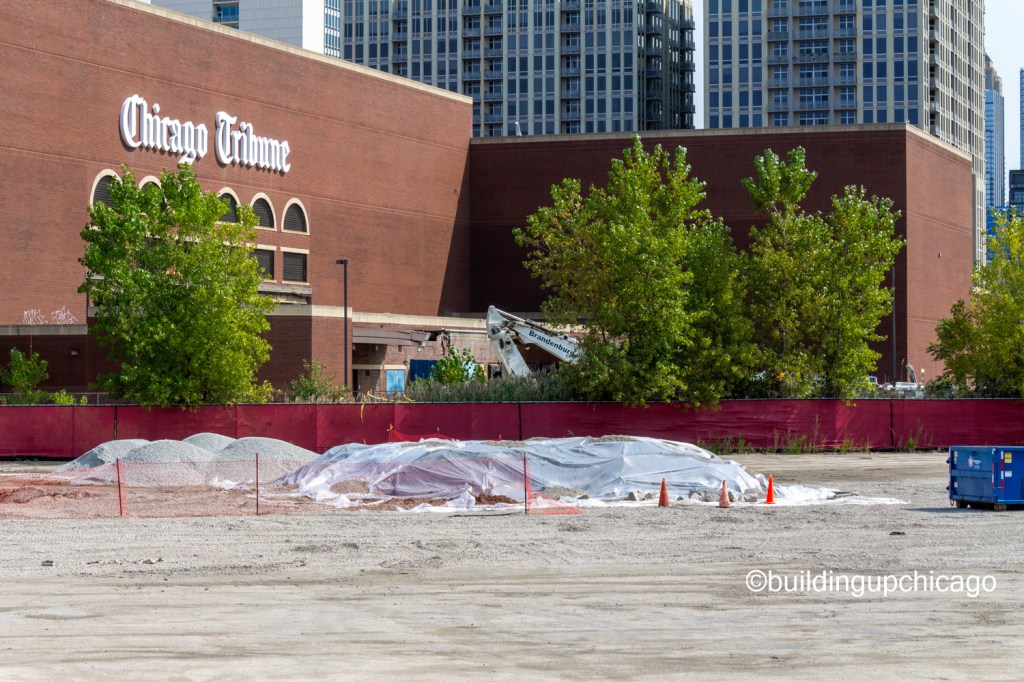
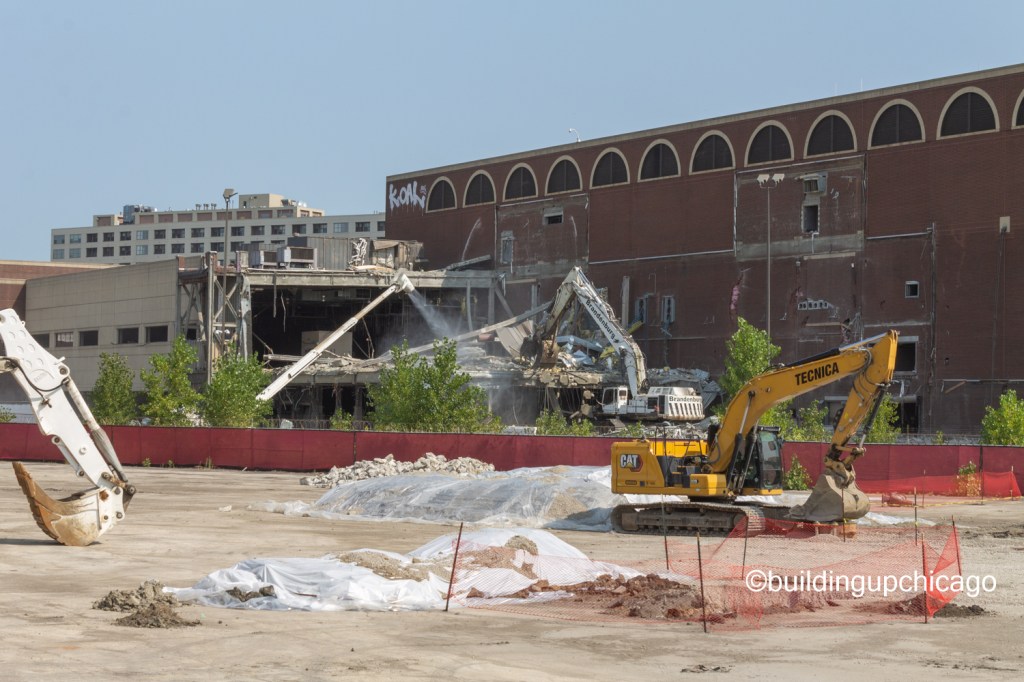
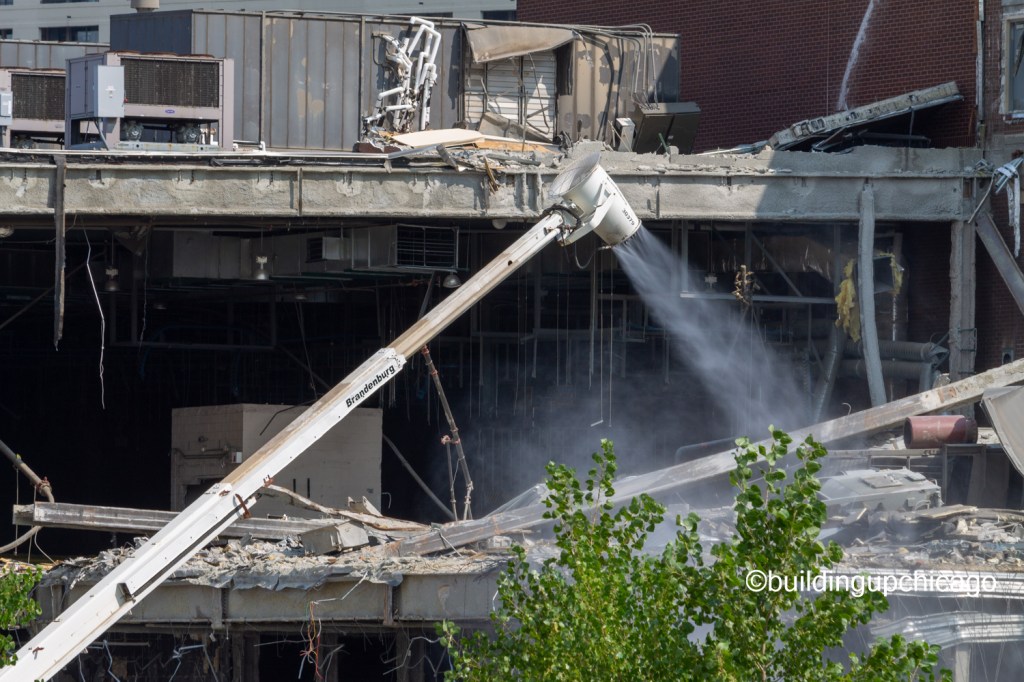
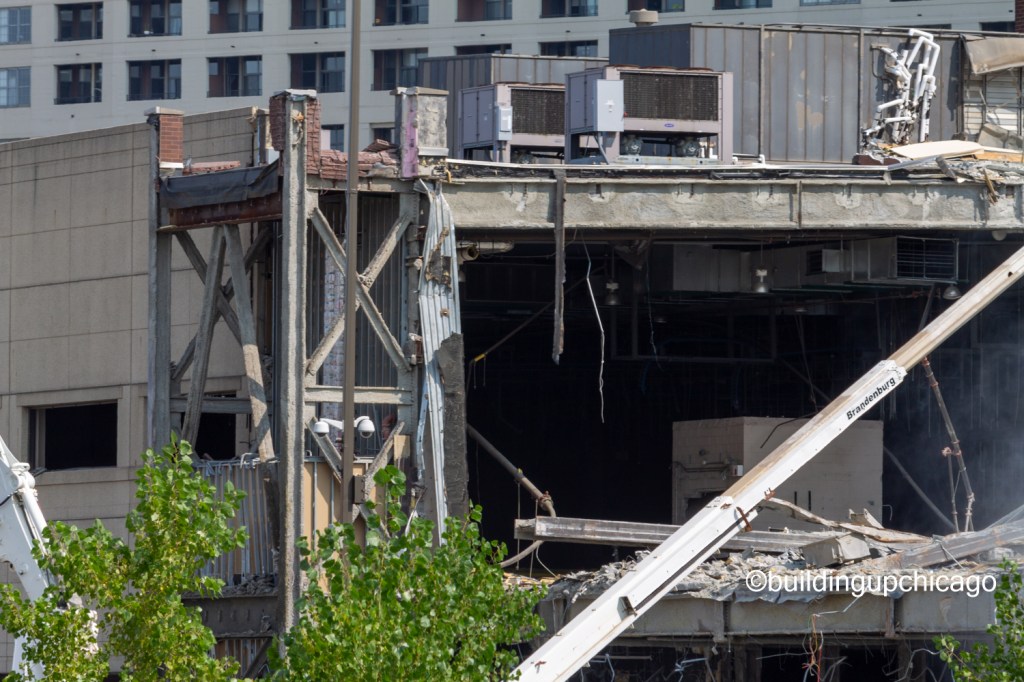
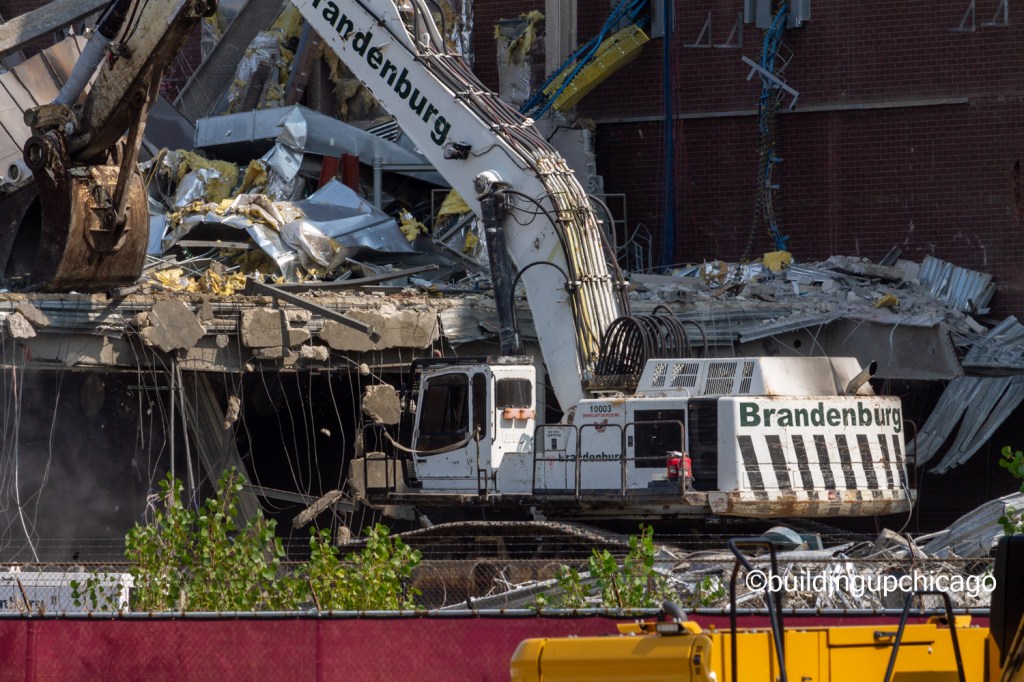
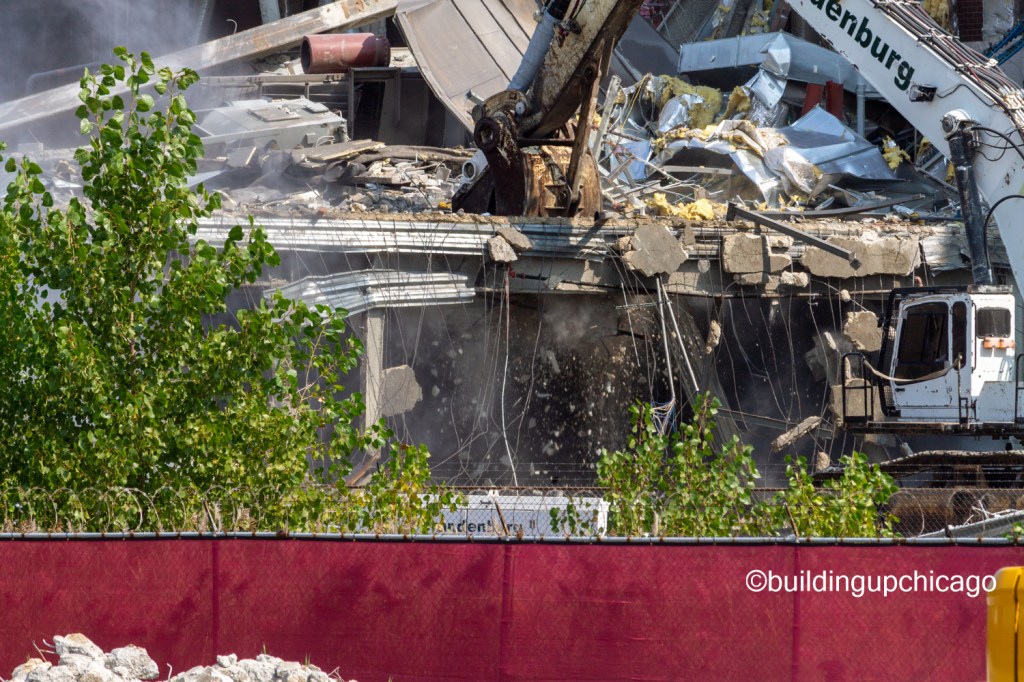
Demolition of the former Chicago Tribune Freedom Center continues on the West Side.
I wasn’t going to post more Chicago Tribune Freedom Center demolition photos this soon, since I just published a bunch of them last week, but there were rainbows…
The west side of the building is history. These were taken late in the afternoon on 09/18/2024:
Enjoying the photos? Metra and CTA rides (and Amtrak trains to Milwaukee), Zipcars, Divvy Bikes, camera lenses, domain fees, snacks & energy drinks, and comfortable walking shoes add up. You can help offset expenses by making a greatly-appreciated donation to Building Up Chicago.
An historic two-story brick building at 37 South Ashland Avenue in the Near West Side Community Area is getting new life, thanks to a renovation from ZSD Corp. Built in 1904 as the West End Woman’s Club, it became the home of the United Electrical Workers in 1948. ZSD purchased the building from the union in March of this year for $1.65 million; they’re in the midst of overhauling it into apartments. In keeping with the original name, it has been dubbed West End Club. They hope to welcome their first tenants in summer 2025.
The West End Woman’s Club, via Chicago History MuseumRendering of West End Club courtesy of ZSD Corp.
A permit was issued by the City of Chicago to make the office-to-residential conversion to the building, located on the northeast corner of Ashland Avenue and Monroe Street, on May 15, 2024. It calls for a two-story addition atop the two existing levels, while lowering the original basement, and adding a rooftop deck. There will be 22 rental units here: 16 one-bedroom, 4 three-bedroom, and 2 four-bedroom apartments. An elevator will be added, and the front of the building will feature a sunken patio. The main entrance will be placed along Monroe Street. There will be no parking spaces included in the development.
Google image shows the UE Hall limestone nameplate that covered “West End Woman’s Club”Google Street View image of Electrical Workers murals on the south façade.
Before gutting the interior, yeoman’s efforts were made to remove and preserve a painted mural on the walls throughout the building’s interior. UE is leasing office space at the Chicago Teachers Union building at 1901 West Carroll Avenue, and the mural will be on display there. You can read more about those preservation efforts at the Chicago Tribune and Chicago Sun-Times.
According to ZSD’s Zev Salomon:
“We’re proud to be restoring the facade of this historic building and we’re happy to collaborate with the seller to ensure the preservation of the Solidarity mural.”
ZSD Corp, along with developing West End Club, is also acting as their own general contractor. The design team includes Andrew R Wang as the Architect of Record, Philadelphia firm IS Architects as the Design Architect, and SK Design Group as the Interior Designer.
The photos below include some taken on the first of September when scaffolding covered the west façade. That has since been removed and reassembled for work on the south wall.
Enjoying the photos? Metra and CTA rides (and Amtrak trains to Milwaukee), Zipcars, Divvy Bikes, camera lenses, domain fees, snacks & energy drinks, and comfortable walking shoes add up. You can help offset expenses by making a greatly-appreciated donation to Building Up Chicago.
The Thompson Center is open to the sky, but not to the public, during reconstruction.
Fear not. The Thompson Center *still* isn’t being demolished; it just looks that way. Its transformation into Google offices has taken a toll on the tri-colored exterior, and while the replacement skin might not be as colorful, it will make the building much easier to heat and cool. But for now, it looks rather bare. I almost feel guilty for looking at it, much less taking pictures. But it looks pretty dang cool this way. Now, to get them to let me stand in the atrium before they get the new cladding on…
Enjoying the photos? Metra and CTA rides (and Amtrak trains to Milwaukee), Zipcars, Divvy Bikes, camera lenses, domain fees, snacks & energy drinks, and comfortable walking shoes add up. You can help offset expenses by making a greatly-appreciated donation to Building Up Chicago.
Construction of the North Tower at 400 Lake Shore continues to put on a show.
It’s been nearly three weeks since I’ve given you an update on 400 Lake Shore North Tower construction progress, and for that, I apologize. The concrete core has gotten a little taller, and there isn’t a single shred of evidence remaining of the Chicago Spire Hole. What I’d call the “sub-basement floor” or whatever the proper term is for the lowest floor of the tower, is poured, and there’s rebar sticking up and lying down everywhere. And I don’t know what that embankment is all about at the north end of the site (parallel to Ogden Slip) but even that’s cool as heck.
Enjoying the photos? Metra and CTA rides (and Amtrak trains to Milwaukee), Zipcars, Divvy Bikes, camera lenses, domain fees, snacks & energy drinks, and comfortable walking shoes add up. You can help offset expenses by making a greatly-appreciated donation to Building Up Chicago.
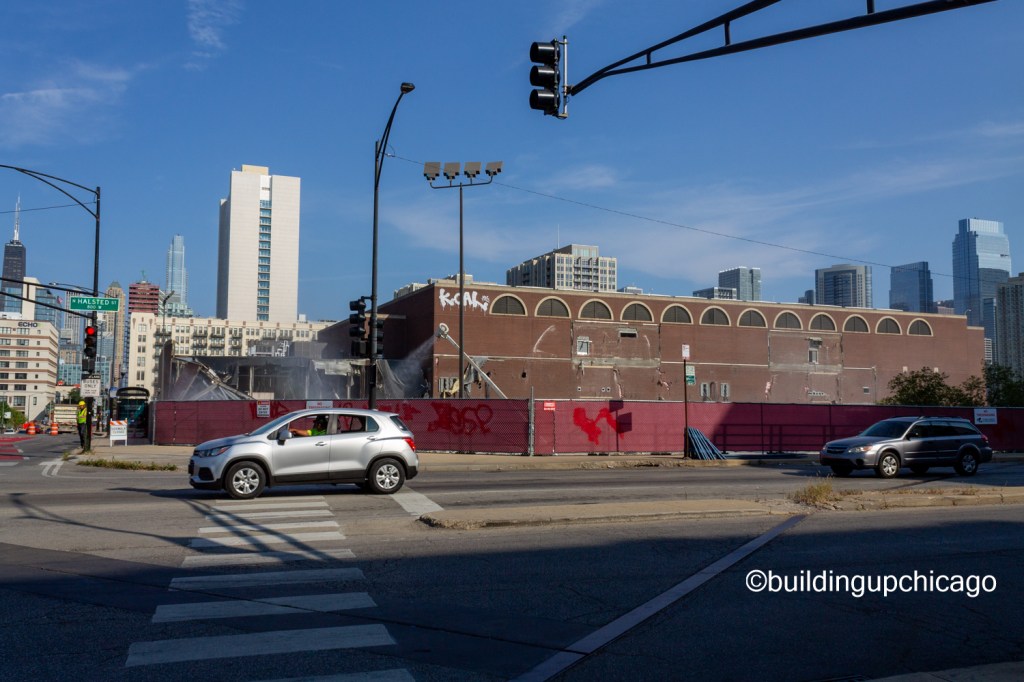
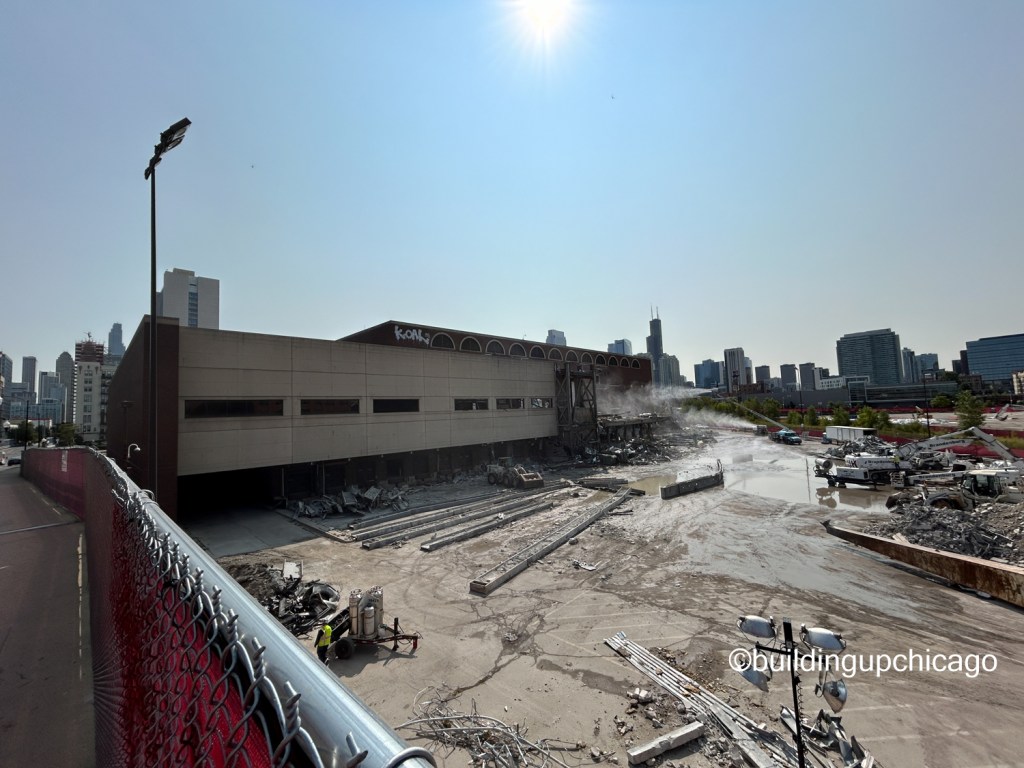
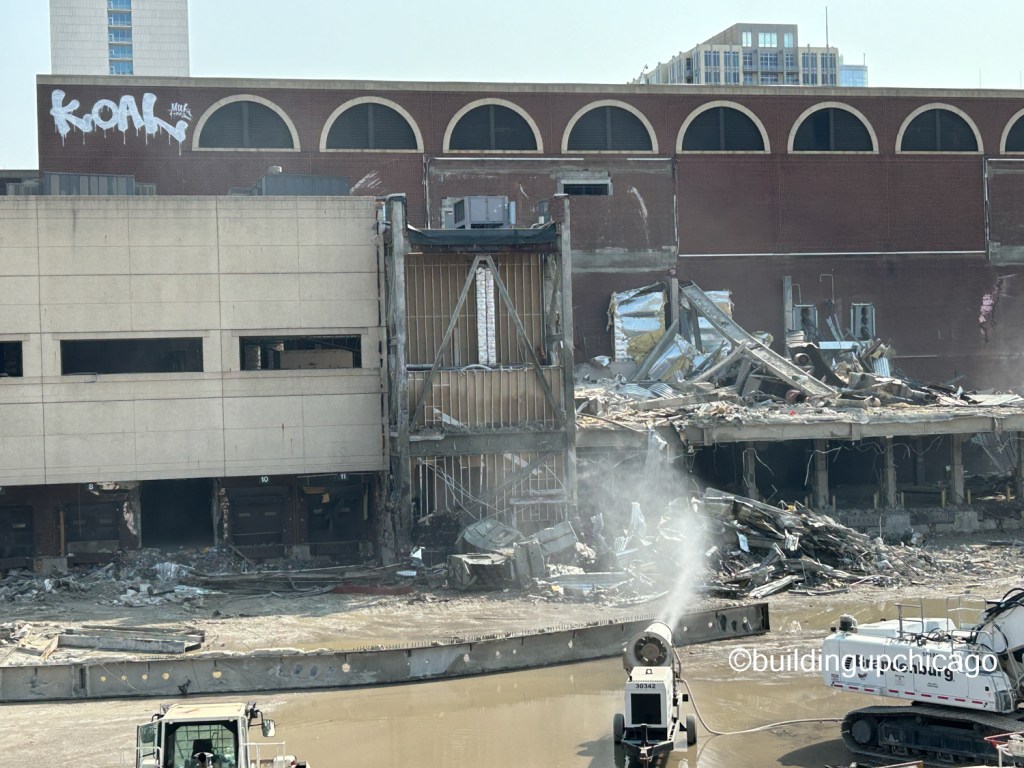
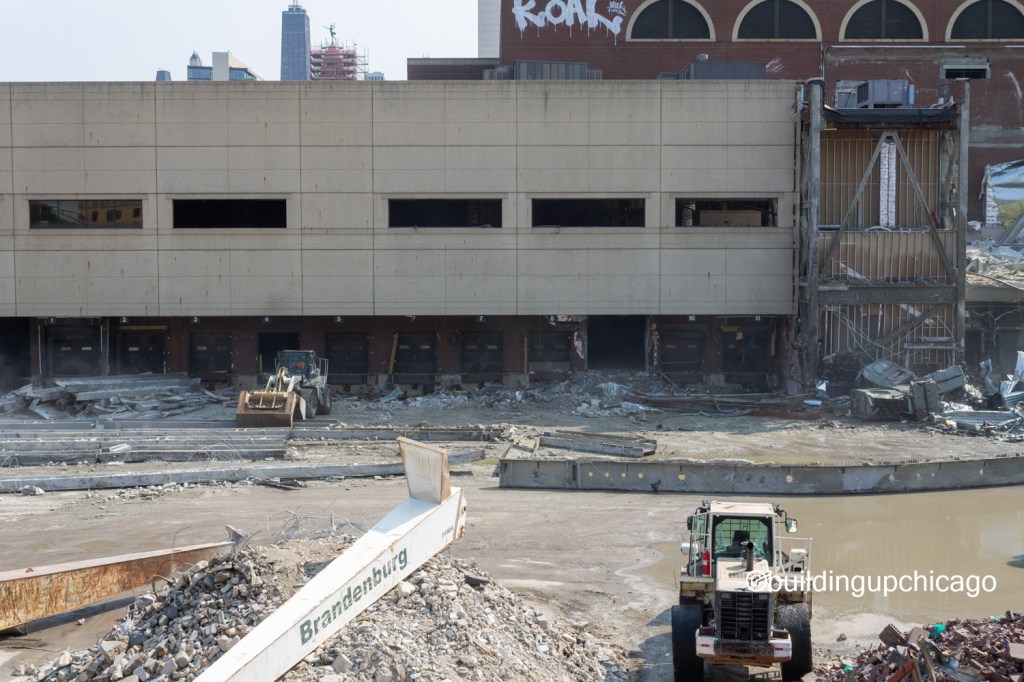
By now, you know that Bally’s is building a casino along the Chicago River at Chicago Avenue and Halsted Street. And you also know that’s where the Chicago Tribune printing operation used to be. So I’m not going to waste your time with a bunch of words. Instead, here are photos of demolition progress on the Chicago Tribune Freedom Center, taken September 10, 2024.
Chicago Tribune Freedom Center demolition, 09/10/2024
Enjoying the photos? Metra and CTA rides (and Amtrak trains to Milwaukee), Zipcars, Divvy Bikes, camera lenses, domain fees, snacks & energy drinks, and comfortable walking shoes add up. You can help offset expenses by making a greatly-appreciated donation to Building Up Chicago.
919 West Fulton no longer has a tower crane, having taken it down last week. Skender (who watched crane removal up close and personal in that Instagram video) topped out the building in July, so it stuck around for a bit before being lowered to the ground.
The Fulton Market District still has one tower crane in operation, at 220 North Ada. There are six others around town:
2 at UChicago Medicine in Hyde Park Obama Presidential Center in Jackson Park Project H.O.O.D. in Grand Crossing 1723 South Michigan in the South Loop 400 Lake Shore in Streeterville
We have one permit awaiting erection, at the Thompson Center in The Loop. I was told yesterday that should go up by the end of the month.
Craneless 919 West Fulton, photographed September 10, 2024:
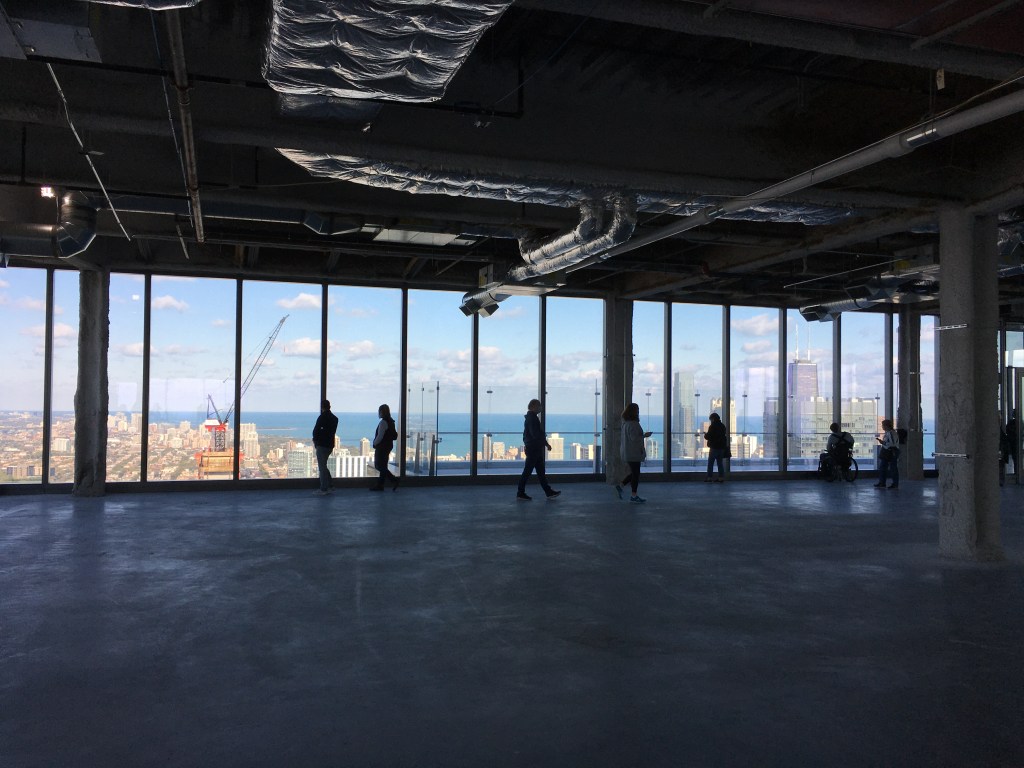
The views from high atop 110 North Wacker were the highlight for me from Open House Chicago 2021.
Monday, the Chicago Architecture Center announced its list of sites for Open House Chicago 2024. This year’s tour includes more than 170 sites, 25 of them new to the program, broken up into 23 areas around the city. There’s a photo contest this year too, for those of you (us) who like to snap a few dozen-hundred pictures during OHC weekend.
The raw space at 110 North Wacker, open to the public for Open House Chicago 2021.
As usual, you’ll find me anywhere downtown that offers me a view from above Chicago. You can use the Open House Chicago 2024 site to tag your favorite destinations, and set up an itinerary.
You can read the Chicago Architecture Center’s press release below:
FOR IMMEDIATE RELEASE
September 10, 2024
CHICAGO ARCHITECTURE CENTER’S 2024 OPEN HOUSE EVENT FEATURES 20+ NEIGHBORHOODS, ADDS 25 NEW SITES AND PHOTO COMPETITION
The Annual Public Festival, the Largest of its Kind in the World, Provides Free Access to Culturally, Architecturally and Historically Significant Sites Throughout Chicago’s Diverse Neighborhoods on October 19 and 20
CHICAGO—The Chicago Architecture Center (CAC) today announced the sites for this year’s Open House Chicago (OHC), a free festival that instills civic pride by providing behind-the-scenes access to places of architectural, historical and cultural significance and highlights businesses, organizations and creative leaders making a positive impact in Chicago’s diverse neighborhoods. This year, OHC will highlight 170+ locations across 20+ Chicago neighborhoods, including 25 new sites, on October 19 and 20.
“With all the new developments happening or proposed in Chicago, it’s more important than ever that people see how architecture and design shape our city,” said Eleanor Gorski, CEO & President, Chicago Architecture Center. “Open House Chicago is easily accessible and free to all. We hope the event fosters dialogue about architecture and inspires people to become more actively engaged in shaping and improving our built environment.”
OHC, now in its 14th year, allows attendees to visit significant sites across the city, many of which are normally closed to the public. The event is one of the largest architecture and urban exploration festivals in the world, attracting more than 25,000 people annually.
This year, new sites include the Ramova Theatre in Bridgeport, which opened as a movie theater in 1929 and shut its doors in 1985, sitting vacant for nearly 30 years before being redeveloped and reopened this year as a restaurant, brewery and concert and events venue. The Ramova Theatre will also host CAC’s Designing Futures Gala on Oct. 1 to raise funds for OHC and other CAC programming.
Participants will also get an inside peek at the historic Chess Studio at Willie Dixon’s Blues Heaven Foundation, where legendary artists who shaped the sound of Chicago blues performed over the years. Also new to OHC is Bronzeville’s Al-Sadiq mosque, one of the oldest mosques in the United States and the former headquarters of the Ahmadiyya Muslim Community USA. OHC participants will also have access to The Driehaus Museum’s Murphy Auditorium for the first time, an architectural marvel designed by noted Chicago architects Benjamin Marshall and Charles E. Fox. The building features a pair of cast bronze doors produced by Tiffany Studios and an iconic limestone exterior was built to mimic the façade and flanking entry staircase of the Chapelle Notre-Dame-de-Consolation in Paris.
Also new this year is the OHC photo competition. Festival attendees can showcase their photography skills by submitting photos taken at OHC sites in one of four categories: interior, exterior, black & white, and detail. Submissions can be made through the competition webpage at architecture.org. Selected entrants will have their photography printed and displayed at the CAC over the holiday season as part of the Center’s “Framed Views: OHC Photography” exhibition that opens on Nov. 23. Winners of the competition, which will be judged by local photographers, will receive complimentary memberships to the CAC.
By making learning about architecture accessible to all, OHC is a key part of the Chicago Architecture Center’s mission to inspire people to discover why design matters. It was developed based on a similar festival in the United Kingdom that was founded in 1992 to allow people to explore buildings in London. This year’s OHC event includes partnerships with local small businesses like Starshaped Press in Ravenswood, which is creating official OHC merchandise.
In addition to the tours, OHC sites will also host more than 40 programs and activations during the weekend. Growing Home Urban Street Farm in Englewood is hosting a hands-on mosaic magnet-making activity at its Harvestfest on Oct. 19; the National Museum of Puerto Rican Arts & Culture in Humboldt Park will have drop-in salsa lessons and art-making activities; the Historic Pullman Foundation is offering mini tours of the Pullman neighborhood in collaboration with the Illinois Labor Historical Society; and Graceland Cemetery in Uptown will be hosting art classes with ofrenda/paper marigold making for Dia de Los Muertos in collaboration with the National Museum of Mexican Art. More events will be announced closer to OHC weekend.
People interested in attending the event or volunteering can learn more details on the Chicago Architecture Center’s new website or download the CAC app to plan their OHC weekend. The app allows users to sort by neighborhood and building type and build routes to enjoy all that OHC offers.
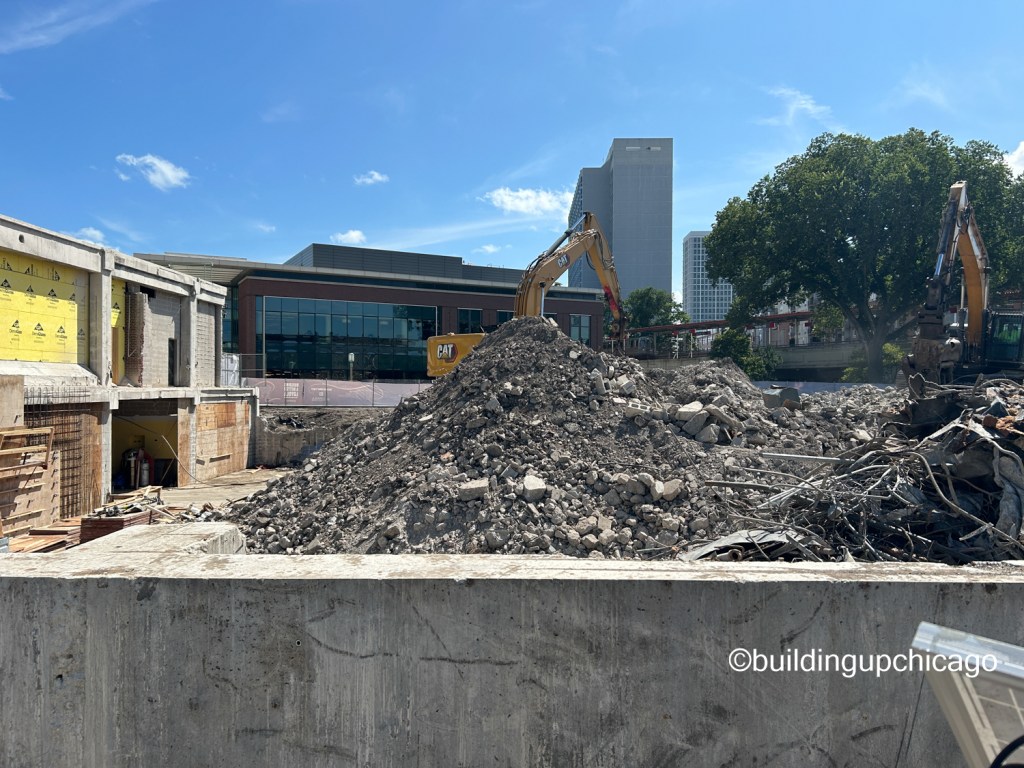
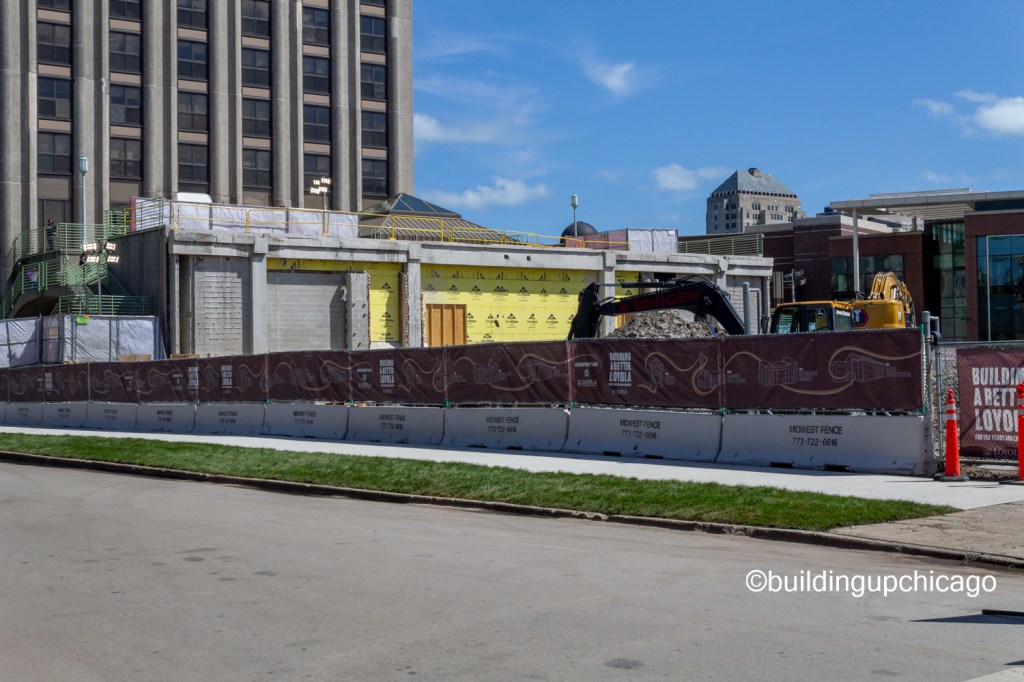
Loyola University Chicago’s Centennial Forum demolition is nearing completion.
Quite a bit of debris remains, but little else other than memories, of the Loyola University Chicago Centennial Forum demolition in Rogers Park. The City of Chicago issued a demolition permit for the two-story concrete building on May 23, and demo contractor American Demolition got to work almost immediately. Now the entire structure is gone, and work is being done below grade to close off the multi-level plaza that connected Centennial Forum to Mertz Hall next door.
Power Construction is the general contractor for the entirety of this project, but it still seems the only plan for the site is to make it “green space.” Not permanently, but green nonetheless. For now.


























 Building Up Chicago